
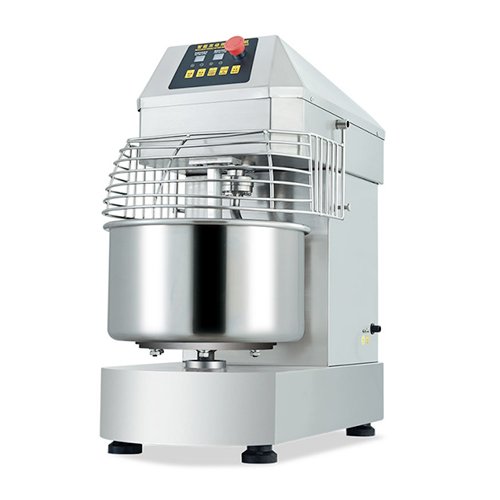
In the competitive world of commercial baking, efficiency and consistency are paramount to success. Whether you’re running a small artisan bakery or a large-scale production facility, the right equipment can make the difference between thriving and merely surviving. Enter the commercial double action dual speed spiral dough mixer – a game-changing piece of equipment that’s transforming how professional bakers approach dough preparation.
What Makes Double Action Dual Speed Spiral Mixers Special?
The Science Behind Spiral Mixing
Spiral dough mixers represent the pinnacle of mixing technology, designed specifically for bread and pizza dough production. Unlike traditional planetary mixers, spiral mixers feature a stationary bowl with a rotating spiral hook that moves in a fixed pattern, creating optimal gluten development while maintaining dough temperature.
The double action feature refers to the mixer’s ability to rotate both the spiral hook and the bowl simultaneously, ensuring thorough ingredient incorporation and uniform mixing. This dual movement creates a more efficient mixing process that reduces mixing time while improving dough quality.
Dual Speed Advantages
The dual speed functionality offers bakers unprecedented control over their mixing process:
- Low speed: Perfect for initial ingredient incorporation and gentle mixing of delicate doughs
- High speed: Ideal for intensive gluten development and final dough conditioning
This versatility allows bakers to customize their mixing approach based on specific recipe requirements and desired dough characteristics.
Capacity Options: Finding Your Perfect Match
Commercial double action dual speed spiral mixers are available in various capacities to suit different operational needs:
Small to Medium Operations
- 5kg capacity: Perfect for boutique bakeries and specialty shops
- 8kg capacity: Ideal for cafes with in-house baking programs
- 12kg capacity: Suitable for small commercial bakeries
Medium to Large Operations
- 15kg capacity: Great for established bakeries with steady production
- 18kg capacity: Perfect for high-volume neighborhood bakeries
- 25kg capacity: Ideal for regional bakery chains
Large-Scale Production
- 30kg capacity: Suitable for wholesale bakery operations
- 40kg capacity: Perfect for large commercial facilities
- 50kg capacity: Ideal for industrial bakery applications
- 100kg capacity: Designed for maximum production environments
Key Benefits for Commercial Bakers
Enhanced Dough Quality
The spiral mixing action creates superior gluten development compared to other mixing methods. This results in:
- Better dough elasticity and extensibility
- Improved gas retention during fermentation
- More consistent texture in finished products
- Enhanced flavor development through proper mixing
Operational Efficiency
Double action dual speed mixers significantly improve bakery operations through:
- Reduced mixing times compared to traditional methods
- Lower energy consumption per batch
- Minimal heat generation during mixing
- Consistent results batch after batch
Versatility in Application
These mixers excel with various dough types:
- Bread doughs of all hydration levels
- Pizza dough for restaurants and pizzerias
- Artisan sourdough preparations
- Enriched doughs for pastries and sweet breads
Temperature Control
Maintaining proper dough temperature is crucial for fermentation and final product quality. Spiral mixers generate less friction heat, helping bakers maintain optimal dough temperatures throughout the mixing process.
Choosing the Right Capacity for Your Business
Assessing Your Production Needs
When selecting a spiral mixer capacity, consider these factors:
Daily Production Volume: Calculate your average daily dough requirements across all products.
Batch Size Flexibility: Larger capacity mixers can handle smaller batches, but smaller mixers cannot exceed their maximum capacity.
Peak Production Periods: Account for busy seasons, special orders, and growth projections.
Kitchen Space Constraints: Ensure your chosen mixer fits comfortably in your workspace with adequate clearance.
Capacity Utilization Guidelines
For optimal efficiency and equipment longevity:
- Operate mixers at 60-80% of maximum capacity for regular production
- Reserve full capacity for peak periods or special orders
- Consider having multiple smaller units rather than one large unit for flexibility
Installation and Setup Considerations
Space Requirements
Spiral mixers require adequate space for:
- Safe operation and maintenance access
- Ingredient loading and dough removal
- Proper ventilation around the motor
- Easy cleaning and sanitation
Power Requirements
Commercial spiral mixers typically require:
- Three-phase electrical connections for larger models
- Adequate amperage capacity for motor operation
- Proper grounding for safety compliance
Integration with Existing Workflow
Consider how the mixer will fit into your current production flow:
- Proximity to ingredient storage areas
- Access to scales and measuring equipment
- Connection to downstream processes like dividing and shaping
Maintenance and Longevity
Daily Maintenance Practices
- Thorough cleaning after each use
- Inspection of mixing hook and bowl for wear
- Lubrication of moving parts as recommended
- Checking for loose bolts or connections
Preventive Maintenance Schedule
- Weekly deep cleaning and sanitization
- Monthly inspection of drive components
- Quarterly professional servicing
- Annual comprehensive equipment review
Signs of Optimal Performance
- Consistent mixing times across batches
- Even dough development throughout the bowl
- Minimal noise during operation
- Stable mixing speeds under load
Cost-Benefit Analysis for Bakery Owners
Initial Investment Considerations
While commercial spiral mixers represent a significant upfront investment, the long-term benefits include:
- Reduced labor costs through automation
- Improved product consistency leading to less waste
- Enhanced production capacity enabling business growth
- Lower energy costs compared to less efficient mixing methods
Return on Investment Factors
- Increased production capacity
- Improved product quality leading to customer retention
- Reduced ingredient waste through consistent mixing
- Lower maintenance costs compared to inferior equipment
Future-Proofing Your Bakery Investment
Scalability Considerations
When investing in mixing equipment, consider:
- Potential for business expansion
- Seasonal production variations
- New product development opportunities
- Market demand fluctuations
Technology Integration
Modern spiral mixers often feature:
- Digital controls for precise timing and speed control
- Programmable mixing cycles for different products
- Safety interlocks and emergency stops
- Energy monitoring capabilities
Making the Right Choice
Selecting the appropriate commercial double action dual speed spiral dough mixer requires careful consideration of your current needs and future aspirations. The investment in quality mixing equipment pays dividends through improved product quality, operational efficiency, and customer satisfaction.
Whether you’re starting with a compact unit for a small operation or investing in a high-capacity mixer for large-scale production, the key is choosing equipment that aligns with your business goals and growth trajectory.
The right spiral mixer becomes more than just equipment – it becomes a cornerstone of your bakery’s success, enabling you to produce consistently excellent products that keep customers coming back for more.
