
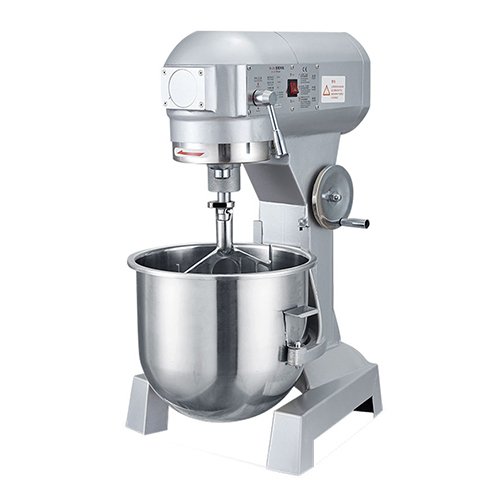
What Are Commercial Planetary Food Mixers?
Commercial planetary food mixers are heavy-duty kitchen equipment designed for professional food preparation environments. Unlike traditional mixers, planetary mixers feature a unique mixing action where the beater rotates around the bowl while simultaneously spinning on its own axis, ensuring thorough and consistent mixing results. These versatile machines are available in various capacities ranging from 10 to 100 liters, making them suitable for businesses of all sizes.
Who Needs Commercial Planetary Food Mixers?
Target Customers and Applications
Restaurant Owners and Chefs Professional kitchens require reliable equipment that can handle high-volume food preparation. Planetary mixers excel at creating consistent doughs, batters, and other preparations that form the foundation of menu items.
Bakery and Pastry Shop Operators From small artisan bakeries to large-scale production facilities, these mixers are essential for bread dough, cake batters, and pastry preparations.
Hotel and Catering Services Large-scale food service operations benefit from the efficiency and consistency these mixers provide when preparing meals for hundreds of guests.
Food Production Facilities Commercial food manufacturers rely on planetary mixers for consistent product quality and efficient production processes.
Educational Institutions Culinary schools and large-scale cafeterias utilize these mixers for both training purposes and meal preparation.
When Should You Invest in a Planetary Mixer?
The timing for investing in a commercial planetary mixer depends on several factors:
- Business Growth Phase: When your manual mixing processes become time-consuming and labor-intensive
- Quality Consistency Needs: When achieving uniform results becomes critical for your business reputation
- Volume Increases: When your daily production requirements exceed what smaller equipment can handle efficiently
- Menu Expansion: When adding items that require specialized mixing techniques
- Labor Optimization: When reducing manual labor costs becomes a priority
Where Are These Mixers Most Effective?
Optimal Operating Environments
Commercial Kitchens Professional kitchen environments with adequate space, proper ventilation, and electrical infrastructure are ideal for planetary mixer installation.
Production Areas Dedicated food preparation areas with workflow efficiency considerations benefit most from strategic mixer placement.
Temperature-Controlled Spaces Environments with consistent temperatures ensure optimal ingredient performance and equipment longevity.
Why Choose Planetary Mixers Over Alternatives?
Key Advantages and Benefits
Superior Mixing Action The planetary motion ensures ingredients are thoroughly incorporated without overmixing, resulting in better texture and consistency.
Versatility Multiple attachment options allow for various preparation methods including mixing, whipping, kneading, and specialized applications.
Time Efficiency Automated mixing processes free up staff for other critical tasks while ensuring consistent results.
Durability Commercial-grade construction withstands the demands of professional environments and high-volume usage.
Consistent Results Standardized mixing processes help maintain product quality and reduce waste from failed batches.
Scalability Various capacity options allow businesses to choose equipment that matches their current needs while accommodating future growth.
How to Choose the Right Capacity
Capacity Selection Guidelines
10-15 Liter Capacity Ideal for small restaurants, cafes, and boutique bakeries with limited space and moderate production needs.
20-30 Liter Capacity Suitable for medium-sized restaurants, catering operations, and growing bakeries requiring increased production capability.
40-50 Liter Capacity Perfect for larger restaurants, hotel kitchens, and established bakeries with substantial daily production requirements.
60-80 Liter Capacity Designed for high-volume operations including large catering services, institutional kitchens, and commercial bakeries.
100 Liter Capacity Built for industrial-scale operations, large food production facilities, and enterprises requiring maximum output.
Selection Factors to Consider
Daily Production Volume Calculate your typical daily mixing requirements to determine appropriate capacity needs.
Available Space Ensure adequate kitchen space for equipment installation, operation, and maintenance access.
Power Requirements Verify electrical infrastructure can support the mixer’s power demands.
Growth Projections Consider future business expansion when selecting capacity to avoid premature equipment replacement.
Budget Constraints Balance initial investment with long-term operational efficiency gains.
Operational Considerations
Maximizing Equipment Performance
Proper Training Ensure staff understand optimal operating procedures and safety protocols.
Regular Maintenance Implement scheduled maintenance programs to extend equipment life and maintain performance.
Attachment Selection Choose appropriate mixing attachments for specific applications to achieve desired results.
Load Management Operate within recommended capacity limits to prevent equipment strain and ensure consistent results.
Investment Benefits
Return on Investment Factors
Labor Cost Reduction Automated mixing processes reduce manual labor requirements and associated costs.
Consistency Improvements Standardized mixing results reduce waste and improve customer satisfaction.
Production Efficiency Faster mixing cycles increase overall kitchen productivity and output capacity.
Menu Expansion Opportunities Versatile equipment capabilities enable broader menu offerings and revenue growth.
Long-Term Durability Quality commercial equipment provides years of reliable service with proper maintenance.
