
The Complete Guide to Commercial Dough Mixers: How to Choose the Right Machine for Your Bakery, Restaurant, or Hotel Kitchen
Find the perfect dough mixing solution to streamline your food preparation, improve consistency, and boost your kitchen productivity.
If you run a bakery, pizzeria, restaurant, hotel kitchen, or café, you already know that dough preparation is one of the most labor-intensive tasks in any commercial kitchen. Whether you are making bread, pizza dough, pastry, or dumpling wrappers, the quality and consistency of your dough directly affects the final product your customers enjoy.
A reliable commercial dough mixer takes the hard work out of kneading and mixing, delivering uniform results batch after batch. But with so many types of dough mixing machines available — from spiral mixers to planetary mixers to horizontal models — choosing the right one can feel overwhelming.
This guide breaks down everything you need to know: the different types of commercial dough mixers, which scenarios each type suits best, common pain points they solve, and how to pick the ideal machine for your specific operation.
Why Does Your Commercial Kitchen Need a Dough Mixer?
Hand-kneading dough might work for a home kitchen, but in a commercial setting, it creates serious bottlenecks. Here are the most common challenges that foodservice operators face without a proper commercial bread dough mixer or pizza dough mixer:
- Inconsistent dough quality: Manual mixing leads to variations in texture and gluten development, which affects the taste and appearance of your baked goods.
- High labor costs: Kneading dough by hand is physically demanding and time-consuming, requiring more staff hours.
- Limited production capacity: Without a dough kneading machine, scaling up to meet peak-hour demand or catering orders becomes nearly impossible.
- Staff fatigue and injury risk: Repetitive manual kneading can lead to strain injuries, increasing downtime and healthcare costs.
- Slow turnaround: When dough preparation takes too long, it delays everything downstream — proofing, baking, and serving.
A well-chosen industrial dough mixer eliminates these problems, giving your kitchen the speed, consistency, and capacity it needs to operate smoothly during every service.
What Types of Commercial Dough Mixers Are Available?
Not all dough mixers are created equal. Each type is engineered for specific dough types, batch sizes, and kitchen environments. Below is an overview of the three most common categories used in HORECA and commercial bakery settings.
1. Spiral Dough Mixer — The Bread and Pizza Specialist
| Feature | Details |
|---|---|
| Mixing Action | Spiral hook rotates while the bowl turns, mimicking hand-kneading motion |
| Best For | Bread dough, pizza dough, bagels, focaccia, and other yeast-based doughs |
| Dough Type | Medium to heavy, high-gluten doughs |
| Ideal Users | Bakeries, pizzerias, hotel kitchens, large restaurants |
| Key Advantage | Excellent gluten development without overheating the dough |
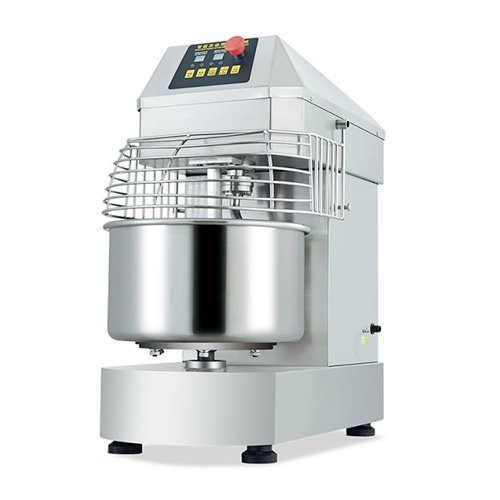
A spiral dough mixer — ideal for bread and pizza dough production in commercial kitchens.
The spiral dough mixer is the go-to choice for any operation that focuses on bread or pizza. Its unique dual-motion system — where the spiral hook and the bowl rotate simultaneously — develops gluten structure efficiently while keeping dough temperature low. This is critical for yeast doughs, where excessive heat can cause premature fermentation and compromise texture.
If you operate a dedicated bakery or a pizzeria producing large volumes of dough daily, a spiral mixer will be your most valuable piece of equipment. Many models come with two-speed settings, allowing you to mix ingredients at low speed and knead at high speed for optimal results.
2. Planetary Mixer — The Versatile All-Rounder
| Feature | Details |
|---|---|
| Mixing Action | Attachment orbits around a stationary bowl (like a planet around the sun) |
| Best For | Cake batter, cream, icing, cookie dough, light pastry dough, sauces |
| Dough Type | Light to medium doughs, batters, and whipped mixtures |
| Ideal Users | Cafés, patisseries, hotel pastry departments, multi-purpose restaurant kitchens |
| Key Advantage | Multi-functional — whisk, paddle, and dough hook attachments for diverse tasks |
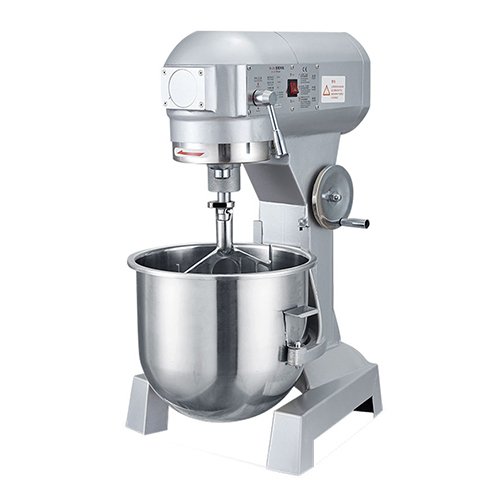
A planetary mixer — the versatile workhorse for pastry, batter, and light dough applications.
The planetary mixer is the Swiss Army knife of commercial kitchens. Its orbital mixing action ensures that every part of the bowl is reached, producing thoroughly blended batters, creams, and doughs. With interchangeable attachments — typically a flat beater, wire whisk, and dough hook — a single planetary food mixer can handle whipping cream, mixing cake batter, preparing cookie dough, and even kneading lighter bread doughs.
For cafés, pastry shops, and hotel kitchens that need one machine to cover multiple tasks, the planetary mixer offers unmatched flexibility. It is also an excellent choice for restaurants that prepare sauces, mashed potatoes, or other non-dough items alongside their baking needs.
3. Horizontal Dough Mixer — The Heavy-Duty Powerhouse
| Feature | Details |
|---|---|
| Mixing Action | Horizontal shaft with paddles or forks rotates inside a trough-style bowl |
| Best For | Very stiff doughs, large-batch production, noodle dough, dumpling dough |
| Dough Type | Heavy, dense, low-hydration doughs |
| Ideal Users | Large-scale bakeries, noodle factories, industrial food production, central kitchens |
| Key Advantage | Handles very large batches and extremely stiff doughs with ease |

A horizontal dough mixer — built for heavy-duty, large-batch dough kneading operations.
When your operation demands serious power and volume, the horizontal dough mixer delivers. Its trough-shaped bowl and horizontal mixing arms are specifically designed to handle very stiff, dense doughs that would strain other mixer types. This makes it the preferred choice for operations producing noodles, dumplings, tortillas, and other products that require low-hydration doughs.
Central kitchens, large-scale bakeries, and food manufacturing facilities rely on horizontal dough kneading machines for their ability to process large batches efficiently. The horizontal design also makes loading and unloading dough easier, which speeds up workflow in high-volume environments.
Which Commercial Dough Mixer Is Right for Your Business?
Use the comparison table below to quickly identify which type of commercial dough mixer matches your kitchen’s needs:
| Criteria | Spiral Dough Mixer | Planetary Mixer | Horizontal Dough Mixer |
|---|---|---|---|
| Primary Use | Bread & pizza dough | Batter, cream, light dough | Stiff & heavy dough |
| Versatility | Moderate | High | Low (specialized) |
| Gluten Development | Excellent | Good | Excellent |
| Batch Size | Medium to large | Small to medium | Large to very large |
| Dough Temperature Control | Excellent | Moderate | Good |
| Best Kitchen Type | Bakery, pizzeria, hotel | Café, pastry shop, restaurant | Central kitchen, factory |
| Footprint | Compact to medium | Compact | Medium to large |
How Different Businesses Use Commercial Dough Mixers
Every foodservice operation has unique requirements. Here is how different types of businesses benefit from the right dough mixer machine:
Bakeries and Artisan Bread Shops
For dedicated bakeries, a commercial bread dough mixer — typically a spiral model — is essential. Bread production demands consistent gluten development and careful temperature management. A spiral mixer handles high-hydration sourdoughs, dense rye breads, and enriched brioche doughs with equal ease, allowing bakers to maintain product quality across every batch.
Pizzerias and Italian Restaurants
Pizza dough requires thorough kneading to achieve the right elasticity and chewiness. A pizza dough mixer — again, usually a spiral type — ensures that every ball of dough has the same texture and stretch. This consistency is what separates a great pizza from an average one, especially when you are producing hundreds of pizzas per service.
Hotels and Resort Kitchens
Hotel kitchens serve diverse menus — from breakfast pastries and dinner rolls to dessert cakes and specialty breads. A planetary mixer paired with a spiral dough mixer gives hotel pastry and bakery teams the flexibility to handle everything from delicate whipped cream to heavy artisan dough, all within the same kitchen.
Cafés and Coffee Shops
Cafés that bake their own muffins, scones, cookies, and light pastries benefit most from a planetary food mixer. Its compact size fits smaller kitchen spaces, while its versatility means you can whip, beat, and knead with a single machine — perfect for operations where kitchen real estate is limited.
Central Kitchens and Large-Scale Food Production
Centralized food production facilities that supply multiple outlets need maximum throughput. A heavy-duty dough mixer — such as a horizontal model or a large-capacity spiral mixer — enables these operations to prepare massive quantities of dough efficiently, ensuring that all locations receive product of identical quality.
What Are the Key Benefits of Investing in a Commercial Dough Mixer?
| Benefit | How It Helps Your Business |
|---|---|
| Consistent Product Quality | Every batch of dough comes out with the same texture, hydration, and gluten structure — ensuring your bread, pizza, or pastry tastes the same every time. |
| Reduced Labor Dependency | Automated kneading frees up your kitchen staff to focus on shaping, baking, and other value-added tasks instead of exhausting manual work. |
| Higher Production Capacity | A commercial flour mixer processes larger batches in less time, enabling you to meet high demand during peak hours, holidays, and special events. |
| Better Dough Temperature Control | Especially with spiral mixers, the controlled mixing action prevents overheating — critical for yeast-based doughs that require precise fermentation conditions. |
| Improved Workplace Safety | Modern dough mixers come with safety guards, emergency stops, and enclosed mixing chambers that protect operators during use. |
| Long-Term Cost Savings | By reducing waste from inconsistent batches and lowering labor hours, a quality dough mixing machine pays for itself over time. |
How to Choose the Right Dough Mixer for Your Kitchen
Selecting the best commercial dough mixer depends on several factors specific to your operation. Ask yourself these questions before making a purchase:
What Type of Dough Do You Make Most Often?
If your primary product is bread or pizza, prioritize a spiral dough mixer. If you mainly prepare cakes, pastries, and batters, a planetary mixer is the better fit. For very stiff or dense doughs in high volumes, consider a horizontal dough mixer.
How Much Dough Do You Need Per Batch?
Match the bowl capacity to your production needs. Choosing a mixer that is too small forces you to run multiple batches, wasting time. Choosing one that is too large wastes energy and may not mix small batches effectively.
How Much Space Is Available in Your Kitchen?
Measure your available floor space carefully. Planetary mixers tend to have the smallest footprint, making them suitable for compact kitchens. Horizontal mixers require the most space, so plan your kitchen layout accordingly.
Do You Need Multi-Functionality?
If your kitchen handles diverse food preparation tasks beyond dough — such as whipping, blending, or mixing fillings — a planetary food mixer with multiple attachments offers the best return on investment.
What Power Supply Does Your Kitchen Support?
Commercial dough mixers come in various voltage and phase configurations. Verify your kitchen’s electrical capacity before ordering to ensure compatibility and avoid costly electrical upgrades.
How to Maintain Your Commercial Dough Mixer for Long-Lasting Performance
A well-maintained dough kneading machine delivers reliable service for years. Follow these essential maintenance practices:
- Clean after every use: Remove all dough residue from the hook, bowl, and safety guard. Dried dough buildup can strain the motor and affect hygiene.
- Inspect moving parts regularly: Check the spiral hook, bowl drive mechanism, and belt (if applicable) for signs of wear.
- Lubricate as recommended: Follow the manufacturer’s guidelines for greasing gears and bearings to prevent friction damage.
- Avoid overloading: Never exceed the recommended dough capacity. Overloading puts excessive stress on the motor and gearbox.
- Schedule professional servicing: Periodic professional inspections can catch potential issues before they become expensive repairs.
Proper care of your commercial dough mixer not only extends its lifespan but also ensures food safety and consistent performance throughout its service life.
Ready to Find the Perfect Dough Mixer for Your Kitchen?
Whether you need a spiral dough mixer for your bakery, a planetary mixer for your café, or a heavy-duty horizontal mixer for large-scale production — we are here to help you choose the right equipment.
