
The Essential Commercial Planetary Mixer Guide for Professional Kitchens and Bakeries
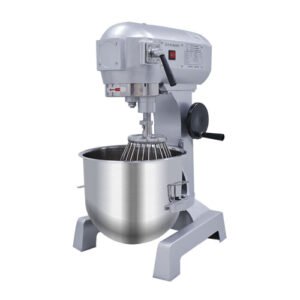
In the food service industry, consistency and efficiency are the cornerstones of success. Whether preparing delicate meringues, heavy bread dough, or savory fillings, professional food preparation requires equipment that can handle demanding daily tasks. A commercial planetary mixer is one of the most versatile and reliable systems a commercial kitchen can invest in. By automating labor-intensive mixing tasks, these robust units help businesses maintain high food quality while optimizing overall kitchen operations.
Addressing Common Kitchen Challenges in Food Preparation
Commercial kitchens, bakeries, and catering operations face daily pressures to deliver high-quality food quickly and consistently. Without the right commercial food mixer, several operational challenges can impact a business:
Inconsistent Product QualityManual mixing or using underpowered equipment often leads to uneven ingredient distribution. This results in inconsistent dough texture, poorly whipped cream, or unevenly blended fillings, which can disappoint loyal customers. A planetary mixer uses an orbital mixing action to reach every part of the bowl, ensuring completely uniform results.
|
High Labor Costs and Physical StrainPreparing large batches of dough or batter by hand is physically demanding and time-consuming. It ties up valuable kitchen staff who could be focusing on food presentation, customer service, or menu development. Automating the mixing process reduces manual labor, minimizes physical fatigue, and allows staff to multitask.
|
Limited Production CapacitySmall or residential-grade mixers cannot handle the volume required for commercial operations. Attempting to mix large batches in weak machines can cause motor burnout, leading to unexpected downtime and lost revenue. Heavy-duty commercial mixers are engineered with powerful motors and durable gear systems to run continuously.
|
Key Advantages of Using a Commercial Planetary Mixer
Investing in a professional planetary mixer brings immediate benefits to your food preparation workflow. These machines are designed to deliver versatility, durability, and ease of use in demanding commercial environments.
Multi-Functional VersatilityUnlike single-purpose mixers, planetary mixers feature interchangeable attachments. A typical unit includes a dough hook for kneading heavy dough, a flat beater for blending batters and fillings, and a wire whip for aerating creams and egg whites. This versatility allows a single machine to support a wide range of menu items. |
Robust and Durable ConstructionBuilt with heavy-duty cast iron or steel bodies and stainless steel bowls, these mixers are engineered to withstand the rigorous demands of busy commercial kitchens. The gear-driven transmission systems ensure stable power delivery even when handling heavy loads. |
Improved Operational EfficiencyWith multiple speed settings, operators can precisely control the mixing process. This control speeds up preparation times, ensures consistent results across different shifts, and allows the kitchen to scale up production to meet peak-hour demand. |
Commercial Applications Across Different Food Businesses
Planetary mixers are highly adaptable, making them suitable for various commercial food preparation environments. Depending on your business model, these mixers can be utilized in distinct ways:
Bakeries and Pastry ShopsIn baking, precision is vital. Bakeries rely on planetary mixers to knead bread dough, mix cake batters, and whip delicate frostings or meringues. The ability to switch between low-speed kneading and high-speed whipping makes it the primary workhorse for pastry chefs. |
Restaurants and CafesFor restaurants and cafes, a planetary mixer helps diversify the menu. It can be used to prepare fresh pasta dough, blend specialty sauces, mix house-made butter, or prepare signature desserts. It offers a compact solution for kitchens that require versatile food preparation. |
Catering and Large-Scale Food ServiceLarge-scale operations, such as hotel kitchens, institutional cafeterias, and catering companies, require high-volume food preparation. Heavy-duty mixers with large bowl capacities allow these businesses to prepare massive batches of mashed potatoes, meat fillings, or batters efficiently. |
Selecting the Right Mixer Capacity for Your Business
Choosing the correct mixer size is essential to ensure operational efficiency and prevent equipment overload. Below is a comparison of common commercial mixer capacities and their typical applications:
| Mixer Capacity Range | Typical Applications | Best Suited For |
|---|---|---|
| Small Capacity (10L – 15L) | Whipping cream, mixing small batches of sauce, preparing specialty pastry dough | Small cafes, boutique pastry shops, and restaurant prep stations |
| Medium Capacity (20L – 40L) | Kneading bread dough, mixing cake batters, preparing cookie dough | Standard bakeries, busy restaurants, and medium-sized catering kitchens |
| Large Capacity (50L – 100L) | Heavy dough kneading, high-volume batter mixing, large-scale food blending | Large commercial bakeries, central kitchens, and high-volume food factories |
Frequently Asked Questions
What is the difference between a planetary mixer and a spiral mixer?
A planetary mixer features an attachment that rotates on its own axis while orbiting around a stationary bowl, making it highly versatile for whipping, blending, and kneading. A spiral mixer, on the other hand, features a rotating bowl while the spiral hook remains in a fixed position, which is specifically optimized for kneading large batches of heavy bread or pizza dough.
How do I choose between a gear-driven and a belt-driven planetary mixer?
Gear-driven mixers offer robust power transmission and are highly reliable for mixing heavy doughs, as they prevent slipping under heavy loads. Belt-driven mixers operate more quietly and can absorb shocks from sudden load changes, though the belts may require periodic adjustment or replacement over time.
What maintenance is required for a commercial food mixer?
Daily cleaning of the bowl, attachments, and splash guard is essential to maintain food hygiene. Regular inspection of the gear lubricants, checking the alignment of the bowl lift mechanism, and ensuring the safety guard sensors are clean and functioning properly will help extend the service life of the equipment.
Can I use a commercial mixer to prepare non-bakery food items?
Yes, planetary mixers are highly versatile. By utilizing the flat beater attachment, commercial kitchens can easily mix mashed potatoes, blend ground meat for meatballs or fillings, emulsify sauces, and prepare various batters, making them valuable assets beyond traditional baking.
Ready to Upgrade Your Commercial Kitchen?
Explore our range of professional food preparation equipment or contact our specialists to find the perfect mixer capacity for your business.
